Kamis, 08 Desember 2011

HUAWEI IDEOS X5 SPECS


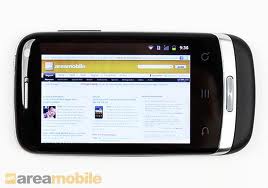
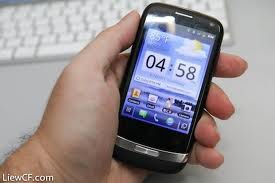
Somewhat overshadowed by the plethora of big name handset announcements during CES, the Huawei IDEOS X5 quietly arrived on the scene with its mid-range specs in tow. Although we had some brief hands-on time with the upcoming Android 2.2 Froyo smartphone during the event, we're getting some intimate one on one time with a prototype unit that should allude to what we'll all expect once it's officially released by one of the major US carriers. And just because it doesn't have the brand recognition of its competitors, the IDEOS X5 may seemingly open the doors for Huawei in breaching the US market. However, it may take more than a well rounded performance and decent specs to leave its mark amongst consumers.


Design:

Quickly picking up the prototype handset, there isn't anything overly compelling about it to make us assume it's something refreshingly new. As a matter of fact, it follows in tradition to any other slate-like device on the market, but surprisingly resonates with an overall quality feel. Specifically, its chrome trim bezel accents naturally with its soft touch rear cover – which of course, keeps it looking clean and free from scratches. Moreover, its ample size actually doesn't make it feel bulky compared to devices packing 4” and up displays. As a whole, we're quite satisfied with its build quality, The Huawei IDEOS X5 easily separates

In recent memory, devices packing on displays with WVGA resolution were generally deemed as high-end, but we're starting to see it become more common – thus permeating into the mid-range segment. And that's what we're treated to with the 3.8” WVGA (480 x 800) display of the Huawei IDEOS X5 as it brings forth some clear and crisp visuals that are happily agreeable to anyone's tastes. Furthermore, the display is able to exhibit some neutral looking colors.

After getting situated with its layout, the capacitive buttons beneath the display have enough space between them and the bottom of the handset to reduce accidental presses. Additionally, the piercing back-lighting allows us to view them in any situations.n terms of physical buttons, there are relatively few clinging onto the sides of the handset; we find a reasonably sized volume rocker on the left edge and a dedicated power button on the top side. Aside from that, the IDEOS X5 boasts the traditional 3.5mm headset jack and microUSB port we're accustomed to seeing on most smartphones.
In the rear, the 5-megapixel auto-focus camera juts out from the surrounding area and is a cause of concern because the lens is in direct contact of whatever surface you place the handset on. In addition, we find both the LED flash and speakerphone grill placed to the right of the camera. Sliding off the back cover provides access to the SIM card slot, battery, and microSD card slot – the latter of which is hot-swappable.
Overall, it'd be almost unlikely to find the Huawei IDEOS X5 undergo some drastic design changes with the eventual production unit – except for the carrier branding it'll be flaunting. Ground breaking by any mean? Definitely not, but it's a stark contrast to the undesirable look and feel of their previous attempt in the US with the T-Mobile Comet, which is to say that... yes, we like it.
specification

General 2G Network GSM 850 / 900 / 1800 / 1900
3G Network HSDPA 900 / 2100
Announced 2010, December
Status Available. Released 2011, April
Size Dimensions 120 x 62 x 11.6 mm
Weight 130 g
Display Type TFT capacitive touchscreen, 16M colors
Size 480 x 800 pixels, 3.8 inches (~246 ppi pixel density)
Multitouch Yes
Protection Scratch-resistant glass, oleophobic coating
 - Touch-sensitive controls
Sound Alert types Vibration, MP3 ringtones
Loudspeaker Yes
3.5mm jack Yes
 - Dolby Mobile sound enhancement
Memory Card slot microSD (TransFlash) up to 32GB, buy memory
Internal 2/4 GB storage, 512 MB RAM
Data GPRS Class 10 (4+1/3+2 slots), 32 - 48 kbps
EDGE Class 10, 236.8 kbps
Speed HSDPA, 14.4 Mbps (U8800H) / 7.2 Mbps (U8800); HSUPA, 5.76 / 2 Mbps
WLAN Wi-Fi 802.11 b/g/n, Wi-Fi hotspot
Bluetooth Yes, v2.1 with A2DP, EDR
USB Yes, microUSB v2.0
Camera Primary 5 MP, 2592х1944 pixels, autofocus, LED flash
Features Geo-tagging
Video Yes, 720p@30fps
Secondary No
Features OS Android OS, v2.2 (Froyo), upgradable to v2.3
Chipset Qualcomm MSM7230
CPU 800 MHz Scorpion
GPU Adreno 205
Sensors Accelerometer, proximity, compass
Messaging SMS(threaded view), MMS, Email, Push Mail, IM
Browser HTML, Adobe Flash
Radio No
GPS Yes, with A-GPS support
Java Yes, via Java MIDP emulator
Colors Black
 - Active noise cancellation with dedicated mic
- SNS integration
- Google Search, Maps, Gmail, Talk
- MP3/WMA/WAV/eAAC+ player
- MP4/WMV/H.263/H.264 player
- Organizer
- Document viewer
- Photo viewer/editor
- Voice memo/dial
- Predictive text input
Battery   Standard battery, Li-Po 1500 mAh
Stand-by Up to 380 h (2G) / Up to 440 h (3G)
Talk time Up to 8 h 20 min (2G) / Up to 6 h 40 min (3G)
 

HUAWEI IDEOS X3 specs


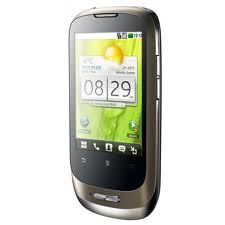
Yesterday at MWC we got our hands on the Huawei IDEOS X3, an Android 2.3 phone slotted right between the IDEOS / Comet we reviewed recently and the X5 we saw at CES. While the original IDEOS took Android significantly downmarket, and the X5 is looking to bring high-end features to the mid-end, the X3 is aimed squarely at bread-and-butter devices like the LG Optimus T. Spec-wise, you'll find a 3.2-inch HVGA capacitive touchscreen, Qualcomm MSM7227 CPU (likely 600 MHz), 256MB of RAM, 3.2 megapixel autofocus camera, front-facing camera, WiFi b / g / n, and dualband HSPA plus quadband EDGE radios, all powered by a 1200mAh battery. Contrary to its siblings, the X3 is not a Google Experience device, and runs a custom skin on top of Gingerbread. See our pictures in the gallery below and jump the break for our first impressions and hands-on video.

We were rather impressed with the X3. It's light, thin, small, and looks surprisingly attractive. Build quality was top notch on the pre-production unit we handled, despite the materials not being completely final. The back is made of a pleasant black soft-touch plastic, and the display glass curves seamlessly into the silver-accented sides of the phone. Huawei chose to adorn Android 2.3 with a custom skin that blatantly copies LG's S-Class UI and Samsung's TouchWiz application tray. The X3 feels quite snappy considering it's powered by a humble MSM7227. Likewise, loading Engadget was drama free, complete with Flash support. We presume this stems from optimizations in Gingerbread. The X3 will be launching in Japan in March for $200 unsubsidized, with other markets to follow. No word yet on a North American variant with the appropriate 3G bands.


The Huawei IDEOS X3 runs the 2.3 'Gingerbread' version of Google's Android platform, and it offers most of the features and functions of far more expensive Android smartphones. The IDEOS X3 has GPS, Wi-Fi and Bluetooth connectivity, a 3.2-megapixel camera that doubles as a VGA video recorder and provides full access to the Android Market for third-party apps. The IDEOS X3's limited processor means it won't support Flash, but it does offer enough grunt to provide pinch-to-zoom capability.

Huawei has slightly tweaked the standard Android interface on the IDEOS X3 without going over the top. The X3 has five home screens for live widgets and uses an attractive cube animation when swiping between screens. You can also touch the home screen overview button to see all home screens at a glance and dive straight into any of them with a single touch. We like some of the extra widgets that Huawei has added, like a clean calendar widget and a combined clock and weather widget. Unfortunately, the main menu uses ugly looking icons that can't be sorted automatically.

The Huawei IDEOS X3 has a modest, single-core 600MHz processor and just 256MB RAM so don't expect super performance. These low specifications combined with a relatively small screen means the Web browsing experience is vastly inferior compared to Android smartphones with larger screens. Although the IDEOS X3 isn't as snappy as faster, more expensive Android phones, it does perform reasonably well considering its price.

The Huawei IDEOS X3 has a microSD card slot for extra storage, located behind the rear battery cover. Vodafone includes a 2GB card in the sales package.

Battery life is very reasonable for an Android phone: the Huawei IDEOS X3 will easily get through a full day of use. This may stretch up to a day and a half depending on your usage patterns.

The Huawei IDEOS X3 is available through Vodafone stores for $99. It is also sold through Allphones, Australia Post, Big W, Coles, Crazy John's, Dick Smith, Mo's Mobiles and Woolworths retail stores in Australia.

SPECIFICATION
 

General 2G Network GSM 850 / 900 / 1800 / 1900
3G Network HSDPA 900 / 2100
Announced 2011, February
Status Available. Released 2011, July
Size Dimensions 110 x 56.5 x 11.2 mm
Weight 104 g
Display Type TFT capacitive touchscreen, 16M colors
Size 320 x 480 pixels, 3.2 inches (~180 ppi pixel density)
 - Touch-sensitive controls
Sound Alert types Vibration, MP3 ringtones
Loudspeaker Yes
3.5mm jack Yes
Memory Card slot microSD (TransFlash) up to 32GB, buy memory
Internal 512 MB ROM, 256 MB RAM
Data GPRS Yes
EDGE Yes
Speed HSDPA, HSUPA
WLAN Wi-Fi 802.11 b/g/n, Wi-Fi hotspot
Bluetooth Yes, v2.1 with A2DP, EDR
USB Yes, microUSB v2.0
Camera Primary 3.15 MP, 2048x1536 pixels, autofocus
Video Yes
Secondary Yes
Features OS Android OS, v2.3 (Gingerbread)
Chipset Qualcomm MSM7227
CPU 600 MHz
Sensors Accelerometer
Messaging SMS(threaded view), MMS, Email, Push Mail, IM
Browser HTML, Adobe Flash
Radio FM radio
GPS Yes
Java Yes, via Java MIDP emulator
Colors Black, Silver, Red
 - SNS integration
- Google Search, Maps, Gmail, Talk
- MP3/WMA/WAV/eAAC+ player
- MP4/WMV/H.263/H.264 player
- Organizer
- Document viewer
- Photo viewer/editor
- Voice memo
- Predictive text input
Battery   Standard battery, Li-Po 1200 mAh
Stand-by Up to 250 h (2G) / Up to 300 h (3G)
Talk time Up to 4 h (2G) / Up to 4 h 10 min (3G)


HUAWEI IDEOS X1 SPECS


Little known Chinese company Huawei has certainly made a splash at the entry point of the Australian mobile phone market by releasing many affordable smartphone handsets for price-conscious Aussie consumers. Its latest low-cost smartphone is the Huawei IDEOS X1. It sells through Optus for just $99 and is sure to attract plenty of positive attention due to its price. The overall user experience that this phone offers is far from good, but at this price it's hard to complain — as long as you know what to expect from your minimal outlay.

The Huawei IDEOS X1 Android phone certainly won't win any design awards, but its compact size will suit users who are put off by the increasingly large size of modern day smartphones. It’s constructed almost entirely from plastic, with a chrome band around the edge attempting to add a touch of class. The curved edges make the IDEOS X1 comfortable to hold, though the rear plastic battery cover does feel a little hollow when pressed.

The position of the IDEOS X1's power button favours left handed users, but the side-mounted volume controls are well placed. The large home button works well enough, but it's positioned too close to the bottom edge of the phone for our liking. This means it requires a great stretch of your thumb to press.

At such a low price point, its always going to be the display that suffers most on a smartphone. The 2.8in touchscreen on the IDEOS X1 is a little cramped and makes text messaging, in particular, quite hard to do. However, the IDEOS X1's screen is at least a capacitive one, making it far more responsive and ultimately superior to the resistive screen of the competing Telstra Smart-Touch, which also retails for $99. The IDEOS X1's screen has poor viewing angles and is tough to see in direct sunlight, but considering the $99 asking price, its certainly passable.

The Huawei IDEOS X1 runs the 2.2 'Froyo' version of Google's Android platform, and it offers most of the features and functions of far more expensive Android smartphones. The IDEOS X1 has a GPS receiver, Wi-Fi and Bluetooth connectivity, and it also has a 3.2-megapixel camera that doubles as a VGA video recorder. It provides full access to the Android Market for third-party applications, and being an Android phone it also has automatic and seamless synchronisation with Google services including Gmail and Calendar.

Huawei has slightly tweaked the standard Android interface on the IDEOS X1. Five home screen for live widgets remain; the cube animation when swiping between screens is a nice touch (even if its not always smooth), as is the ability to see all your home screens at a glance and dive straight into any of them with one touch. Predictably, Optus preloads the IDEOS X1 with a number of shortcuts to its services, including Optus Smart Safe, Optus Zoo, MyAccount, the Optus App Store and the Optus Music Shop. Most of these are merely links to Web pages, though they annoyingly can't be removed completely from the phone.

The Huawei IDEOS X1 has a modest processor (single-core, 528MHz) and limited memory (256MB RAM), but still manages to support multi-touch zooming — meaning you can pinch the screen to zoom in and out of certain apps. The limited processing power means the IDEOS X1 does not offer full Flash support, but this is too much to ask in the first place on a sub-$100 handset with a small screen.

The Huawei IDEOS X1's small screen means the Web browsing experience is noticeably inferior compared to Android smartphones with larger screens. Performance is also an issue — the IDEOS X1 takes notably longer to achieve basic tasks, such as opening and closing apps. We suggest a little patience given that this is a $99 phone and the fact it can do these tasks at all is an achievement in itself.

The Huawei IDEOS X1 has a microSD card slot for extra storage, located behind the rear battery cover, and Optus includes a 2GB card in the sales package. Battery life is very reasonable for an Android phone: the Huawei IDEOS X1 will easily get through a full day of use, and this may even stretch up to a day and a half depending on usage patterns.

The Huawei IDEOS X1 is available exclusively through Optus stores and online for $99.

specification


General 2G Network GSM 850 / 900 / 1800 / 1900
3G Network HSDPA 900 / 2100
Announced 2011, May
Status Available
Size Dimensions 104 x 56 x 13 mm
Weight 100 g
Display Type TFT capacitive touchscreen, 256K colors
Size 240 x 320 pixels, 2.8 inches (~143 ppi pixel density)
 - Touch-sensitive controls
Sound Alert types Vibration, MP3 ringtones
Loudspeaker Yes
3.5mm jack Yes
Memory Card slot microSD (TransFlash) up to 32GB, buy memory
Internal 512 MB ROM, 256 MB RAM
Data GPRS Yes
EDGE Yes
Speed HSDPA, 7.2 Mbps
WLAN Wi-Fi 802.11 b/g/n, Wi-Fi hotspot
Bluetooth Yes, v2.1 with A2DP, EDR
USB Yes, microUSB v2.0
Camera Primary 3.15 MP, 2048x1536 pixels
Features Geo-tagging
Video Yes, QVGA@24fps
Secondary No
Features OS Android OS, v2.2 (Froyo)
Chipset Qualcomm MSM7225
CPU 528 MHz
Sensors Accelerometer, proximity, compass
Messaging SMS(threaded view), MMS, Email, IM
Browser HTML, Adobe Flash
Radio FM radio with RDS
GPS Yes, with A-GPS support
Java Yes, via Java MIDP emulator
Colors Black
 - SNS integration
- Google Search, Maps, Gmail, Talk
- MP3/WAV/eAAC+ player
- MP4/H.263/H.264 player
- Organizer
- Document viewer
- Photo viewer/editor
- Voice memo
- Predictive text input
Battery   Standard battery, Li-Ion 1200 mAh
Stand-by Up to 336 h
Talk time Up to 4 h


Rabu, 07 Desember 2011

THE SMALL AND nimble LG OPTIMUSONE


LG revealed back in July that it will launch ten smartphones in a newly-coined Optimus line by year-end. For now it looks like an even mix of Android and WP7 devices will be in it, and LG will be topping it off with a dual-core smartphone, and a Honeycomb-running tablet. In the initial announcement, the Optimus line naturally started with the Optimus One, and the Optimus Chic, both of which are running Froyo.
Android's "Froyo" update is making its slow, inexorable march across the handsets of the globe, and it's now appearing on new devices as the default operating system. After the hash that was the manual Telstra update this is definitely a plus.One handset that comes with the Android 2.2 update pre-installed is the LG Optimus One. It forms the "budget" end of LG's planned ten-strong Optimus line.

The LG Optimus One looks and feels quite contemporary. There is soft-touch coating all around the phone, interrupted only by the four nice, clickable Android buttons below the 3.2” screen, the 3MP camera on the back, and the chrome-like bezel. The metallic rim is thin around the top, and widens in the bottom half. The volume rocker on the right side, and the lock/power button at the top are designed to be a part of the thin half, and thus hard to find and press.The bezel also wraps around the 3.5mm audio jack on the top, and the microUSB port at the bottom, for an uninterrupted, stylish accentuation of the chrome on black concept. Since the LG Optimus One is not so thin  at 13.3 mm (0.52”), or light at 129 g (4.55 oz), it actually matches its price point as far as physical dimensions are concerned. 
The 3.2” capacitive touchscreen is rather basic as specs (320x480 pixels of resolution, 262 000 colors), but decent in terms of sunlight visibility, viewing angles and responsiveness. The color gamut and contrast could be wider, but at this price point, sacrifices are inevitable. The rounded design, with nice soft-touch coating front and back make the LG Optimus One a pleasure to hold. The chrome-like bezel, and the elevated plate for the two most used Android buttons in the front, add just the grain of pizzazz required to make the handset stand out in the sea of Android design mediocrity.  

On the other hand, music sound quality produced by the handset was very good, but only if you upgrade the bundled headset with ... well ... anything else. The player itself is useable, but there are plenty of viable options available on the Android store.
We were impressed with the quality of the camera too which was able to deal well with some tricky lighting conditions, though low-light performance was as poor as can be expected with no flash. The video camera is serviceable — if you want better performance, invest in a Bloggie or something similar.
Battery life was quite respectable for a smartphone with between one and two days between charges. Charging via a PC is predictably slow with a full charge taking five hours.
The phone comes with a number of applications, including its own App Advisor, and is mildly skinned. Most of the apps worked as advertised though we were disappointed with the voice recorder: it would record for as long as you wanted to but only to an arbitrary amount of time. Moral: don't rely on this for work!
Lastly, the GPS is not bad for free. While it can't compete with even a decent GPS — it can randomly shout "Left" when you're supposed to be travelling in a straight line — it's something that LG's competitors don't offer. (Just watch those cliff roads.


SPECIFICATION


General 2G Network GSM 850 / 900 / 1800 / 1900
3G Network HSDPA 900 / 2100
Announced 2010, July
Status Available. Released 2010, October
Size Dimensions 113.5 x 59 x 13.3 mm
Weight 129 g
Display Type TFT capacitive touchscreen, 256K colors
Size 320 x 480 pixels, 3.2 inches (~180 ppi pixel density)
Sensors Accelerometer, proximity, compass
 

Sound Alert types Vibration, MP3 ringtones
Loudspeaker Yes
3.5mm jack Yes, check quality
Memory Card slot microSD, up to 32GB, 2GB included, buy memory
Internal 170 MB user available, 512 MB RAM
Data GPRS Class 10 (4+1/3+2 slots), 32 - 48 kbps
EDGE Class 10, 236.8 kbps
3G HSDPA 7.2 Mbps
WLAN Wi-Fi 802.11 b/g, Wi-Fi hotspot
Bluetooth Yes, v2.1 with A2DP
USB Yes, microUSB
Camera Primary 3.15 MP, 2048x1536 pixels, autofocus, check quality
Features Geo-tagging, face and smile detection, Beauty Shot
Video Yes, VGA@18fps
Secondary No
Features OS Android OS, v2.2 (Froyo), upgradable to v2.3
Chipset Qualcomm MSM7227
CPU 600 MHz ARM 11
GPU Adreno 200
Messaging SMS (threaded view), MMS, Email, Push Email, IM
Browser HTML
Radio Stereo FM radio
GPS Yes, with A-GPS support
Java Yes, via Java MIDP emulator
Colors Black, wine, titan, blue, silver, purple
 - Social networking integration
- Google Search, Maps, Gmail
- YouTube, Google Talk
- DivX/Xvid/MP4/H.264/H.263/WMV player
- MP3/WAV/WMA/eAAC+ player
- Document viewer/editor
- Organizer
- Voice memo
- Predictive text input
Battery   Standard battery, Li-Ion 1500 mAh
Stand-by Up to 700 h (2G) / Up to 550 h (3G)
Talk time Up to 8 h (2G) / Up to 7 h 30 min (3G)
Misc SAR US 0.45 W/kg (head)     0.37 W/kg (body)    
 

Selasa, 06 Desember 2011

IS NEW LG OPTIMUS 2X


The world cried out for a dual-core smartphone and LG and NVIDIA answered the call. Actually, the world only ever dreamt about multicore mobile architectures up until late last year, but sometimes that's all it takes to get those zany engineers engineering. So here we are, in early February 2011, beholding the world's first smartphone built around a dual-core processor, the Optimus 2X. This is a landmark handset in more ways than one, however, as its presence on the market signals LG's first sincere foray into the Android high end. Although the company delivered two thoroughly competent devices for the platform with the Optimus S and T in 2010, they were the very definition of mid-range smartphones and the truth is that Samsung, HTC and Motorola were left to fight among themselves for the most demanding Android users' hard-earned rubles. So now that LG's joined their ranks, was the wait worth it?


Nothing much has changed since we first met this phone under its codename of Star a couple of months back. One uninterrupted slate of glass covers the entire front, broken up only by the earpiece grille at the very top. Four capacitive touch buttons keep the 4-inch WVGA LCD company, along with a front-facing camera just to the right of the LG logo. As we said in our preview, this is an uncomplicated and restrained design, evidence perhaps that LG chose to spend its time and money on what lies beneath the skin.

The glass front slopes off on its left and right edges before being engulfed by a metallic frame that wraps around the whole handset. Fit and finish between the two is absolutely perfect. The third component to the 2X's external setup is a flexible matte plastic cover that accounts for its entire rear section. It's stupendously easy to remove and replace while still forming a very good seal with its surrounding elements. The austere black back (there'll be brown and white versions too) is decorated with a silver column running through the middle brandishing a "with Google" slogan, which ends in a slight bump near the top, designed to accommodate the 8 megapixel camera module. We're happy to see another little glass cover here protecting the lens from accidental damage.

Overall, the Optimus 2X feels very well put together. It is rigid and unyielding, and although its construction materials are nothing special, the cumulative result is a highly pleasing one. Attention to detail is evident throughout, as even such simple things as the power / lock button and volume keys (the only physical controls on the 2X) feel perfectly measured and built. The screen does suffer from a bout of excessimus bezelitus and we'd have preferred non-capacitive Android buttons, however those are design decisions we'll just have to live with at this point. You'll find the bezel at least partially justified when you open up the rear and see how densely packed the 2X's internals are.

The star of that internal show is undoubtedly NVIDIA's Tegra 2 system-on-chip. It's highlighted by two 1GHz Cortex-A9 CPU cores and eight GeForce GPU cores, yet still finds the room to include native HDMI and dual display support. Pairing those two together means you can see content on your Optimus 2X and your nearest HDTV at the same time, though that capability isn't available when playing back video (only the bigger screen gets the moving picture feed). We still found plenty of use for the dual display functionality, particularly when browsing or showing off pictures on the handset, but it also helps tilt-controlled games like the preloaded Shrek Kart transform the 2X into a very slick-looking motion controller for big-screen gaming. It takes quite some graphical prowess to be able to execute this "HDMI mirroring" technique, particularly when displaying 3D games and not just stills, but the 2X does it without a sweat.


The world cried out for a dual-core smartphone and LG and NVIDIA answered the call. Actually, the world only ever dreamt about multicore mobile architectures up until late last year, but sometimes that's all it takes to get those zany engineers engineering. So here we are, in early February 2011, beholding the world's first smartphone built around a dual-core processor, the Optimus 2X. This is a landmark handset in more ways than one, however, as its presence on the market signals LG's first sincere foray into the Android high end. Although the company delivered two thoroughly competent devices for the platform with the Optimus S and T in 2010, they were the very definition of mid-range smartphones and the truth is that Samsung, HTC and Motorola were left to fight among themselves for the most demanding Android users' hard-earned rubles. So now that LG's joined their ranks, was the wait worth it?
LG Optimus 2X review


Hardware

Nothing much has changed since we first met this phone under its codename of Star a couple of months back. One uninterrupted slate of glass covers the entire front, broken up only by the earpiece grille at the very top. Four capacitive touch buttons keep the 4-inch WVGA LCD company, along with a front-facing camera just to the right of the LG logo. As we said in our preview, this is an uncomplicated and restrained design, evidence perhaps that LG chose to spend its time and money on what lies beneath the skin.

The glass front slopes off on its left and right edges before being engulfed by a metallic frame that wraps around the whole handset. Fit and finish between the two is absolutely perfect. The third component to the 2X's external setup is a flexible matte plastic cover that accounts for its entire rear section. It's stupendously easy to remove and replace while still forming a very good seal with its surrounding elements. The austere black back (there'll be brown and white versions too) is decorated with a silver column running through the middle brandishing a "with Google" slogan, which ends in a slight bump near the top, designed to accommodate the 8 megapixel camera module. We're happy to see another little glass cover here protecting the lens from accidental damage.

Overall, the Optimus 2X feels very well put together. It is rigid and unyielding, and although its construction materials are nothing special, the cumulative result is a highly pleasing one. Attention to detail is evident throughout, as even such simple things as the power / lock button and volume keys (the only physical controls on the 2X) feel perfectly measured and built. The screen does suffer from a bout of excessimus bezelitus and we'd have preferred non-capacitive Android buttons, however those are design decisions we'll just have to live with at this point. You'll find the bezel at least partially justified when you open up the rear and see how densely packed the 2X's internals are.

Tegra 2

The star of that internal show is undoubtedly NVIDIA's Tegra 2 system-on-chip. It's highlighted by two 1GHz Cortex-A9 CPU cores and eight GeForce GPU cores, yet still finds the room to include native HDMI and dual display support. Pairing those two together means you can see content on your Optimus 2X and your nearest HDTV at the same time, though that capability isn't available when playing back video (only the bigger screen gets the moving picture feed). We still found plenty of use for the dual display functionality, particularly when browsing or showing off pictures on the handset, but it also helps tilt-controlled games like the preloaded Shrek Kart transform the 2X into a very slick-looking motion controller for big-screen gaming. It takes quite some graphical prowess to be able to execute this "HDMI mirroring" technique, particularly when displaying 3D games and not just stills, but the 2X does it without a sweat.


That HDMI cable -- bundled in the box, as it should be -- is also put to good use with 1080p video content, which looks sharp and plays back flawlessly on the 2X. As we noted above, the mirroring capability is dropped when handling video, but that's unlikely to be an issue because we can't imagine a usage scenario where you'd need to see a video feed on both displays. Getting the HDMI connection up is a zero-setup affair and playback switches between devices on the fly -- disconnect your HDTV while watching a video and it flips over to the Optimus 2X and its integrated speaker; hook it back up again and within a second it's back booming at you from the HDTV. Just seamless. Scope out the video below for a demonstration of this phone's video-crunching credentials.


The world cried out for a dual-core smartphone and LG and NVIDIA answered the call. Actually, the world only ever dreamt about multicore mobile architectures up until late last year, but sometimes that's all it takes to get those zany engineers engineering. So here we are, in early February 2011, beholding the world's first smartphone built around a dual-core processor, the Optimus 2X. This is a landmark handset in more ways than one, however, as its presence on the market signals LG's first sincere foray into the Android high end. Although the company delivered two thoroughly competent devices for the platform with the Optimus S and T in 2010, they were the very definition of mid-range smartphones and the truth is that Samsung, HTC and Motorola were left to fight among themselves for the most demanding Android users' hard-earned rubles. So now that LG's joined their ranks, was the wait worth it?
LG Optimus 2X review


Hardware

Nothing much has changed since we first met this phone under its codename of Star a couple of months back. One uninterrupted slate of glass covers the entire front, broken up only by the earpiece grille at the very top. Four capacitive touch buttons keep the 4-inch WVGA LCD company, along with a front-facing camera just to the right of the LG logo. As we said in our preview, this is an uncomplicated and restrained design, evidence perhaps that LG chose to spend its time and money on what lies beneath the skin.

The glass front slopes off on its left and right edges before being engulfed by a metallic frame that wraps around the whole handset. Fit and finish between the two is absolutely perfect. The third component to the 2X's external setup is a flexible matte plastic cover that accounts for its entire rear section. It's stupendously easy to remove and replace while still forming a very good seal with its surrounding elements. The austere black back (there'll be brown and white versions too) is decorated with a silver column running through the middle brandishing a "with Google" slogan, which ends in a slight bump near the top, designed to accommodate the 8 megapixel camera module. We're happy to see another little glass cover here protecting the lens from accidental damage.

Overall, the Optimus 2X feels very well put together. It is rigid and unyielding, and although its construction materials are nothing special, the cumulative result is a highly pleasing one. Attention to detail is evident throughout, as even such simple things as the power / lock button and volume keys (the only physical controls on the 2X) feel perfectly measured and built. The screen does suffer from a bout of excessimus bezelitus and we'd have preferred non-capacitive Android buttons, however those are design decisions we'll just have to live with at this point. You'll find the bezel at least partially justified when you open up the rear and see how densely packed the 2X's internals are.

Tegra 2

The star of that internal show is undoubtedly NVIDIA's Tegra 2 system-on-chip. It's highlighted by two 1GHz Cortex-A9 CPU cores and eight GeForce GPU cores, yet still finds the room to include native HDMI and dual display support. Pairing those two together means you can see content on your Optimus 2X and your nearest HDTV at the same time, though that capability isn't available when playing back video (only the bigger screen gets the moving picture feed). We still found plenty of use for the dual display functionality, particularly when browsing or showing off pictures on the handset, but it also helps tilt-controlled games like the preloaded Shrek Kart transform the 2X into a very slick-looking motion controller for big-screen gaming. It takes quite some graphical prowess to be able to execute this "HDMI mirroring" technique, particularly when displaying 3D games and not just stills, but the 2X does it without a sweat.


That HDMI cable -- bundled in the box, as it should be -- is also put to good use with 1080p video content, which looks sharp and plays back flawlessly on the 2X. As we noted above, the mirroring capability is dropped when handling video, but that's unlikely to be an issue because we can't imagine a usage scenario where you'd need to see a video feed on both displays. Getting the HDMI connection up is a zero-setup affair and playback switches between devices on the fly -- disconnect your HDTV while watching a video and it flips over to the Optimus 2X and its integrated speaker; hook it back up again and within a second it's back booming at you from the HDTV. Just seamless. Scope out the video below for a demonstration of this phone's video-crunching credentials.


Once you get past those well executed headline features, however, there's a certain scarcity of real utility to be had from this dual-core chip. The trouble is that smartphones haven't really lacked for processing firepower in a good long while. What applications do you run on your mobile that can choke a 1GHz CPU, whether it be a Snapdragon, Hummingbird or an A4? There aren't many, right? And there are even fewer that have such a demanding overhead while running in the background -- which happens to be NVIDIA's big selling point for Tegra 2, that it allows you to multitask without ever getting bogged down. The chart below illustrates this well, but it also provides your absolute best case scenario -- you'll need to be engaged in a CPU-intensive process while decoding music in the background, another CPU job, and downloading / installing applications. As soon as you back off, say by switching off the background music and allowing your foreground process to have all the processing power (and thereby complete its task more quickly), the benefits of having a dual-core machine will become far less tangible.


SPECIFICATION

 
General 2G Network GSM 850 / 900 / 1800 / 1900
3G Network HSDPA 900 / 1900 / 2100
  HSDPA 900 / 1700 / 2100
Announced 2010, December
Status Available. Released 2011, February
Size Dimensions 123.9 x 63.2 x 10.9 mm
Weight 139 g
Display Type IPS LCD capacitive touchscreen, 16M colors
Size 480 x 800 pixels, 4.0 inches (~233 ppi pixel density)
Multitouch Yes
Sensors Accelerometer, gyro, proximity, compass
 - Gorilla glass display
- Touch-sensitive controls
Sound Alert types Vibration, MP3 ringtones
Loudspeaker Yes
3.5mm jack Yes, check quality
Memory Phonebook Practically unlimited entries and fields, Photocall
Call records Practically unlimited
Internal 8 GB storage, 512 MB RAM
Card slot microSD, up to 32GB, buy memory
Data GPRS Class 12 (4+1/3+2/2+3/1+4 slots), 32 - 48 kbps
EDGE Class 12
3G HSDPA, 7.2 Mbps; HSUPA, 5.76 Mbps
WLAN Wi-Fi 802.11 b/g/n, DLNA, Wi-Fi hotspot
Bluetooth Yes, v2.1 with A2DP
USB Yes, microUSB v2.0
Camera Primary 8 MP, 3264x2448 pixels, autofocus, LED flash, check quality
Features Geo-tagging, face and smile detection, touch focus, image stabilization
Video Yes, 1080p@24fps, 720p@30fps, check quality
Secondary Yes, 1.3 MP
Features OS Android OS, v2.2 (Froyo), upgradable to v2.3
Chipset Nvidia Tegra 2 AP20H
CPU Dual-core 1 GHz Cortex-A9
GPU ULP GeForce
Messaging SMS (threaded view), MMS, Email, Push Email, IM
Browser HTML, Adobe flash
Radio Stereo FM radio with RDS
Games Yes + downloadable
Colors Black
GPS Yes, with A-GPS support
Java Yes, via Java MIDP emulator
 - Social networking integration
- HDMI port
- Google Search, Maps, Gmail
- YouTube, Google Talk
- DivX/Xvid/MP4/H.264/H.263/WMV player
- MP3/WAV/WMA/eAAC+ player
- Document editor
- Organizer
- Voice memo/dial/commands
- Predictive text input
Battery   Standard battery, Li-Ion 1500 mAh
Stand-by Up to 400 h

SONY ERICSSON MIX WALKMAN LIVE MUSIC

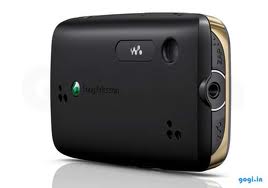
The Walkman brand has a special place in the heart of every old school music lover, but its fame and glory have long started to fade away. Still, there is a bunch of music-oriented phones made by Sony Ericsson that keep the embers alive, and the Sony Ericsson Mix Walkman is exactly one of them. It is a feature phone aimed at youngsters, who are passionate for music, but cannot afford something flashier. However, going over its list of features shows that it offers a fair amount of bang for the buck. 


Firstly, it's a chunky-but-light candybar phone with a curved, rubberised plastic back that sits fine in the palm but doesn't feel particularly solidly built. Style-wise, it apes the standard black appearance of its higher-specced stablemates, but comes with one of a range of plastic customisation bands that we can only imagine is intended to appeal to the young music-loving audience the phone's aimed at.

Still, the Sony Ericsson Mix Walkman certainly isn't ugly, it's just more of a non-descript pebble than a thing of beauty, that's all. The back is smooth and the chassis well balanced, and a 3-inch (400 x 240 pixels) capacitive touchscreen is squeezed into the tiny 3.8 x 2.1 x 0.6 frame that is dwarfed even by our small hands.

Soft key-wise there's a power/lock button on the left-hand side, a thin volume rocker that's almost impossible to find while you're talking, a camera key, home key and two Walkman-related shortcuts embedded into the top of the phone, surrounding the 3.5mm jack.

Powered by Sony Ericsson's own Java-based platform, the capacitive touchscreen (running the Touch UI) is a technological bonus of sorts, offering decently bright picture quality, but the general navigation of the phone isn't particularly smooth or quick. Attempting to scroll through the menu with a light touch, for example, often leads to accidentally opening programmes you didn't mean to.

Despite no 3G internet connection, it does come equipped with Wi-Fi connectivity, which helps internet browsing speeds immensely. Given the target group of young, music-loving people who don't want to spend a great deal on an powerful handset, the internet experience is going to be secondary to the Sony Ericsson Mix Walkman, anyway.

Additionally the phone features a 3.2MP camera with video functionality, microSD slot (up to 32GB) and micro USB port and an external speaker that is astonishingly loud for such a little piece of kit. All in all, the specs are not too shabby for a feature phone.


SPECIFICATION


General 2G Network GSM 850 / 900 / 1800 / 1900 - WT13i
Announced 2011, June
Status Available. Released 2011, August
Size Dimensions 95.8 x 52.8 x 14.3 mm
Weight 88 g
Display Type TFT capacitive touchscreen, 256K colors
Size 240 x 400 pixels, 3.0 inches (~155 ppi pixel density)
Sensors Accelerometer, proximity
 - Scratch-resistant surface

Sound Alert types Vibration, MP3 ringtones
Loudspeaker Yes
3.5mm jack Yes
Memory Phonebook Yes, Photocall
Call records Yes
Internal 256 MB (100 MB user available)
Card slot microSD, up to 32GB, buy memory
Data GPRS Up to 115 kbps
EDGE Up to 200 kbps
3G No
WLAN Wi-Fi 802.11 b/g
Bluetooth Yes, v2.1 with A2DP
USB Yes, v2.0 microUSB
Camera Primary 3.15 MP, 2048x1536 pixels, check quality
Video Yes, QVGA
Secondary No
Features Messaging SMS (threaded view), MMS, Email, IM
Browser WAP 2.0/xHTML, HTML
Radio Stereo FM radio with RDS
Games Yes
Colors Black with pink cloud band, Black with pink band, Black with green bird band, Black with green band
GPS No
Java Yes
 - SNS integration
- Walkman player (MP3/eAAC+/WMA/MP4/H.263)
- SensMe
- TrackID music recognition
- Document viewer
- Voice memo
- Predictive text input
Battery   Standard battery, Li-Ion 1000 mAh
Stand-by Up to 465 h
Talk time Up to 9 h 40 min
Music play Up to 13 h

SONY XPERIA MINI FAST AND SMART


This is where Sony Ericsson Xperia mini to shine. This handset is designed to be stylish and compact, and it's safe to say that the goal has been achieved. We have an all black variant, but there are also all in white, and black with blue or pink back cover for fresh styling. While we find the Xperia mini pro (QWERTY-enabled variant of the mini) is rather plump, Xperia mini action that makes a little more tolerable for use in a pocket. In addition, the handset is the perfect size to carry in a handbag, considering the very compact dimensions.

Sony Ericsson has done an outstanding job with the upgrade Xperia mini so that it matches the current standard. Screen up from 2:55 "QVGA to 3 is much more bearable" HVGA goodness, while keeping the dimensions of the device in tact. The screen itself is pretty good in terms of color and perspective. Unfortunately, ambient light sensor can not be turned off, so you definitely lacking some flexibility in terms of brightness. Outdoors, you must protect your device with your hands, in order to get a readable display. Fortunately, plays well with HVGA resolution screen size, and thus the Sony Ericsson Xperia mini that delivers the fine details, although not Retina Display quality.

This screen is also blessed with a Sony Bravia Engine for enhanced picture and video, which is something that we do appreciate. Finally, while 3 inches of screen real estate is good enough for the tasks of everyday as simple as checking mail, hardcore smartphone users will have to look elsewhere and find a larger selection.
 
 specification

General 2G Network GSM 850 / 900 / 1800 / 1900
3G Network HSDPA 900 / 2100
  HSDPA 850 / 1900 / 2100
Announced 2010, February
Status Available. Released 2010, May
Size Dimensions 83 x 50 x 16 mm
Weight 88 g
Display Type TFT capacitive touchscreen, 16M colors (65K effective)
Size 240 x 320 pixels, 2.55 inches (~157 ppi pixel density)
Sensors Accelerometer, compass
 - Scratch-resistant surface
- Timescape UI
Sound Alert types Vibration, MP3 ringtones
Loudspeaker Yes
3.5mm jack Yes, check quality
Memory Phonebook Practically unlimited entries and fields, Photocall
Call records Practically unlimited
Internal 128MB
Card slot microSD, up to 16GB, 2GB included, buy memory
Data GPRS Up to 85.6 kbps
EDGE Up to 236.8 kbps
3G HSDPA, 7.2 Mbps; HSUPA, 2 Mbps
WLAN Wi-Fi 802.11 b/g, Wi-Fi hotspot (v2.2 or higher)
Bluetooth Yes, v2.0 with A2DP, EDR
USB Yes, v2.0 microUSB
Camera Primary 5 MP, 2592х1944 pixels, autofocus, LED flash, check quality
Features Geo-tagging
Video Yes, VGA@30fps, video light
Secondary No
Features OS Android OS, v1.6 (Donut), upgradable to v2.1
Chipset Qualcomm MSM7227
CPU 600 MHz ARM 11
GPU Adreno 200
Messaging SMS (threaded view), MMS, Email, Push email, IM
Browser HTML
Radio Stereo FM radio with RDS
Games Yes
Colors Gold, Pearl White, Black, Pink, Lime, Red, Silver
GPS Yes, with A-GPS support
Java Yes, via Java MIDP emulator
 - MP4/H.263/H.264/WMV player
- MP3/eAAC+/WMA/WAV player
- Google Search, Maps, Gmail,
YouTube, Calendar, Google Talk
- Google Voice Search (market dependent)
- TrackID music recognition
- Document viewer
- Voice memo
- Predictive text input
Battery   Standard battery, Li-Po 950 mAh
Stand-by Up to 285 h (2G) / Up to 360 h (3G)
Talk time Up to 4 h (2G) / Up to 3 h 30 min (3G)
Misc SAR EU 1.17 W/kg (head